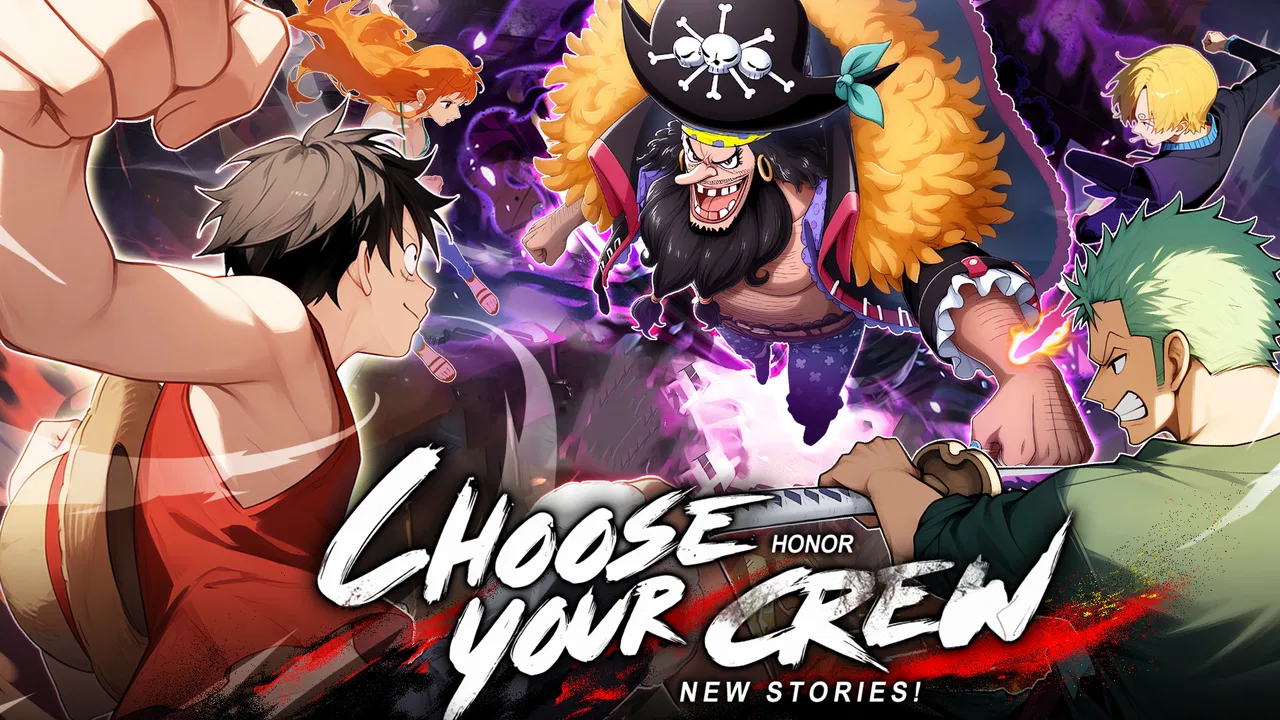
Pirate Wano War
- 3.5
- Rating
- 100.00K
- Installs
- Free
- Price

 Analysis by App-foxy
Pirate Wano War is a free role-playing game from DAI DAI LING that I found easiest to understand as a lightweight, progression-focused pirate adventure. Its central appeal is simple: I can make progress, leave the game, and return later to see my character become stronger. That offline-friendly rhythm makes it more approachable than a role-playing game that expects constant attention, although it also means the experience is less about dramatic moment-to-moment action and more about managing growth over time.
I approached it as someone deciding whether this would fit into ordinary spare moments rather than as a player looking for a large, story-heavy console-style RPG. That distinction matters. The game is free to start, carries a Teen content rating, and has passed the early discovery stage with more than one hundred thousand installs. Its current version is 1.0.9, and it works on Android 5.1 or later, so the technical entry point is fairly broad for older devices.
The overall reception is mixed but not dismissive: the average sits at 3.5 from roughly three thousand ratings, with a little over two hundred written reviews. I read that as a sign that the basic idea works for some players while others run into presentation, pacing, or monetization friction. My own recommendation is therefore conditional: it is worth trying if you enjoy incremental character growth and short check-ins, but it is not the first game I would choose for rich exploration, demanding combat, or a carefully presented narrative.
You May Also Like

 Blood Strike: 2.5 Anniversary
Blood Strike’s Loadouts Turn Every Drop Into a Tactical Gamble
A close look at Blood Strike’s custom loadouts: how fast access to signature weapons reshapes its battle royale rhythm, rewards preparation, and narrows the gap between fights.

 Pandora - Music & Podcasts
Pandora’s Music Is Easy to Start, but Harder to Recover
Pandora’s strength is its low-effort path from a seed to a station. Its weak spot is how much confidence it asks you to place in connection, setup, and quiet recovery.

 8 Ball Pool
 Is Built on Rivalries, Rematches, and Routine
A close look at the rivalries, rematches, shared routines, and unanswered safety questions that turn a quick pool match into a persistent mobile community.

 Samsung Music
’s Quiet Strength Is Playing What You Already Own
Its reach comes less from spectacle than from dependable access to a personal library. That simplicity is both the app’s strongest retention engine and its ceiling.

 AccuWeather: Weather Radar
AccuWeather Review: A Quick, Clear Forecast for Everyday Decisions
For everyday plans, the best forecast is the one you can understand quickly. AccuWeather makes rain timing, radar, and local conditions easy to act on, with a few trade-offs.

 Hill Climb Racing
Why Hill Climb Racing Still Turns Crashes Into One More Run
A tiny car, a bumpy hill and one more upgrade: Hill Climb Racing keeps resurfacing because its simple chaos makes every near-miss feel personal.
More From Our News Desk
View All News


How the game feels to use in different situations
I find that Pirate Wano War’s offline progression is most useful when I can’t give a game my full attention. A quick check-in can fit between errands or during a break, while a longer session gives me time to decide what to improve rather than tapping through in a rush. That flexibility is appealing, but it also makes the game’s pacing and repetition worth considering before it becomes part of a daily routine.
Readability and navigation shape the first impression
The most important usability question here is whether the game lets me understand what deserves attention without making me dig through every screen. A progression game can become tiring when upgrades, rewards, missions, and character improvements compete for attention. In Pirate Wano War, I found that the best way to approach the interface is to treat it as a routine: check the main progression path first, collect what has accumulated, improve the most useful part of the team or character, and only then look at secondary options.
That order is more than a personal preference. It prevents the common mistake of spending resources immediately on whatever button is highlighted. When a game is built around returning after time away, accumulated rewards can create a false sense of abundance. I recommend pausing before claiming everything and deciding which improvement will help with the next obstacle. This makes the menus feel less noisy and turns the idle element into a planning tool rather than a sequence of taps.
For players who rely on clear visual grouping, the game is easier when used in short sessions rather than explored all at once. I would not describe the presentation as designed around deep explanation. Some players will quickly understand the loop; others may need a few visits to learn which screens matter and which can wait. That learning curve is not severe, but it is noticeable because the appeal comes from layered progression rather than one immediately obvious objective.
My practical tip is to make one decision per visit. On a busy day, I would collect progress, make the upgrade that directly supports current advancement, and leave. Trying to inspect every reward and system at once makes the experience feel more complicated than it needs to be. This routine is particularly useful for anyone who finds dense game interfaces mentally tiring or who prefers predictable navigation.
Reading demands and visual comfort
Role-playing games often communicate important information through small labels, changing numbers, icons, and brief prompts. Pirate Wano War is no exception in the way I experienced it: understanding progress requires attention to several visual signals rather than relying only on a large, clearly narrated objective. That can be manageable on a phone held close, but less comfortable on a small display or for someone who has difficulty distinguishing similar icons.
I would approach the game with the device’s own display settings in mind. Increasing system text size, using a brighter screen, or choosing a high-contrast environment may help, although those adjustments can affect how much of the interface fits on screen. The trade-off is important: larger text may improve legibility while making menus feel more crowded. I would test the opening sessions before investing time or money, especially if reading small interface elements is a concern.
The game’s offline progression is helpful here because it reduces pressure to process everything immediately. I can close it, rest my eyes, and return when I am ready. That is a meaningful difference from games that punish a delayed response or require constant visual monitoring. Still, offline progress does not remove the need to read upgrade information carefully. A player who taps quickly may miss the difference between a useful improvement and a merely attractive one.
Motor effort, touch control, and sensory load
One of the more accessible aspects of this format is the reduced dependence on fast reflexes. I did not approach Pirate Wano War as a game that demands precise timing every second. Its progression-centered design makes it more suitable for players who prefer deliberate choices over rapid tapping, and it works well when I have only one hand free or cannot maintain a long uninterrupted play session.
That does not mean the game is effortless for every motor need. Repeated collection, menu changes, and upgrade actions can still create fatigue, especially if a player feels compelled to check every available item. My solution is to set a stopping point before opening the game. For example, I might handle the accumulated progress and one upgrade, then close it instead of continuing through every screen. This turns a potentially repetitive routine into a short, controlled interaction.
The game is also a better fit for players who dislike constant audio pressure, provided they are comfortable relying on visual feedback. I would personally keep the surrounding environment quiet enough to read the interface, but the offline structure means I can choose when and where to play instead of treating every session as a live event. Someone sensitive to rapid movement, flashing effects, or crowded visual presentation should still try the game cautiously and stop if the screen feels uncomfortable.
A less obvious advantage is that the game can fit around interrupted attention. If a delivery arrives, a child needs help, or a work message appears, I can put the phone down without abandoning a real-time battle that requires immediate input. That makes it more practical than action-oriented alternatives for players whose concentration is frequently broken. The compromise is that the satisfaction comes from gradual improvement, not from mastering a difficult control sequence.
Why offline progression matters in everyday use
The clearest everyday scenario is a commute or a short break where I do not want to spend the whole time playing. I can check the game before leaving, let progress build while I am occupied, and return later for a brief round of decisions. The same pattern works during a lunch break, while waiting for an appointment, or at home when I have only a few minutes between chores.
This is where the game separates itself from many conventional role-playing alternatives. A story-driven RPG usually asks me to stay engaged with dialogue, exploration, or combat. A competitive online RPG expects a stable connection and may make me feel that missing a session has consequences. Pirate Wano War is more forgiving about gaps in attention. Its offline progression supports a “check, improve, leave” habit.
However, I would not mistake convenience for depth. If I want a world to explore, a complex plot to follow, or combat where my personal skill changes the result, a traditional role-playing game is likely a better choice. The offline loop is the reason to choose this title, not a side feature that transforms it into a full alternative to larger RPGs.
It is also worth considering the age context. The Teen rating means I would not automatically hand it to a young child, even though the basic progression loop may look simple. Parents should review the game themselves and consider whether the themes, presentation, and purchase options suit the player. The game is free to install, but the listed in-app purchase ceiling is $101.37 per item, which makes spending awareness especially important.
Monetization changes the value calculation
The free entry point makes experimentation easy, but the purchase structure deserves serious attention. A player can start without paying, yet the presence of an in-app item priced as high as $101.37 means I would not treat the game as financially risk-free. The sensible approach is to decide in advance whether I am willing to remain entirely free-to-play and to avoid making purchases simply because progress feels slower after returning.
This is another place where offline progression can work both ways. It gives me a reason to wait and let growth accumulate, which can reduce the need to spend immediately. At the same time, a player who wants faster advancement may be tempted to pay to shorten that waiting period. I prefer to see the waiting as part of the design and judge the game on whether the free routine remains enjoyable.
For families, device owners, or anyone sharing a payment method, purchase controls are essential. I would check the phone’s purchase protections before letting another person play. That advice is not a criticism of the game alone; it is a practical response to the high listed price of individual items. A free download deserves a clear spending boundary, particularly when the core loop encourages repeated returns.
Remaining barriers for different players
The biggest barrier is not fast combat but uncertainty about what deserves attention. Players who enjoy optimizing several systems may appreciate that process, while players who want a direct path can feel that the game is asking them to sort through too many small decisions. I found it more comfortable when I treated the interface as a checklist instead of trying to understand every option immediately.
Another limitation is the likely repetition inherent in offline growth. The same strength-building rhythm that makes the game convenient can become predictable. If I am looking for constant novelty, the title may lose its appeal once the initial curiosity fades. It is better suited to a player who enjoys seeing numbers and capabilities improve gradually than to someone who needs every session to introduce a new mechanic or location.
Older hardware compatibility is a practical positive, but minimum compatibility does not guarantee the same comfort on every phone. Screen size, touch responsiveness, battery condition, and display brightness can all affect the experience. I would be particularly cautious about using a small or aging device if the interface feels crowded, because the game’s usefulness depends on making several small decisions without frustration.
The mixed average rating also supports a measured trial rather than an enthusiastic commitment. Around three and a half stars suggests that the concept has appeal but does not satisfy everyone. I would give it a fair test through several short sessions, paying attention to whether the routine feels rewarding or merely repetitive. If the latter happens, no amount of accumulated progress will make it the right RPG for me.
Who should choose it, and who should skip it?
I would recommend Pirate Wano War to someone who likes pirate-themed role-playing, gradual strengthening, and games that tolerate interruptions. It is especially suitable for players who want a low-pressure companion game alongside a larger RPG, or for anyone who enjoys checking in during spare moments rather than committing to a long play session.
I would also suggest it to players who find reflex-heavy games uncomfortable. The emphasis on progression makes it a more realistic option for people who prefer planning and short touch interactions. It may work well for someone who plays while travelling, during breaks, or in a home routine where attention can be interrupted without warning.
I would skip it if my priority were a substantial narrative, exploration, highly expressive controls, or a competitive environment where every action matters. I would also avoid it if I know that visible purchase options make me feel pressured to accelerate progress. In that case, a paid RPG with a clearly defined upfront cost, or a simpler offline game without prominent monetization, may provide a calmer experience.
For players with visual, motor, or attention-related needs, I would not promise a perfect fit based only on the game’s category. Instead, I would use the free starting point as a practical test: can I read the important labels, make choices without uncomfortable repetition, and understand the next step without assistance? If yes, the short-session structure may serve me well. If not, another RPG with larger controls, more explicit guidance, or stronger customization would be a better choice.
My inclusive verdict after using the progression loop
What I like most is the flexibility. Pirate Wano War does not demand that I organize my day around it. I can let progress happen in the background, return when convenient, and make a few meaningful decisions without needing a long uninterrupted session. That is a genuine strength for busy players and for people who prefer slower, less reflex-dependent role-playing.
What holds it back is the balance between convenience and repetition. The same system that makes it accessible in short bursts can make it feel shallow beside a more traditional RPG. Interface reading, repeated touch actions, and the possibility of expensive individual purchases also mean that the free download should be treated as a trial, not an automatic recommendation.
My final view is cautiously positive. DAI DAI LING has made a game for a specific kind of player: someone who enjoys becoming stronger over time and values offline flexibility more than constant action. I would recommend trying it without spending first, using a simple upgrade routine and paying attention to visual comfort. If that rhythm feels satisfying, the game can become an easy companion for fragmented days. If I want richer storytelling, more varied interaction, or fewer monetization concerns, I would choose a different role-playing experience instead.
FAQs for Pirate Wano War
01What is Pirate Wano War about?
Pirate Wano War is a mobile pirate-themed adventure game inspired by the world of anime-style sea battles. You build a crew, recruit recognizable warrior archetypes, upgrade characters, and fight through story stages, challenges, and competitive encounters. The main appeal is combining different heroes and abilities to create a team that can handle increasingly difficult enemies and bosses.
02Is Pirate Wano War free to download and play?
Pirate Wano War can generally be downloaded and played without an upfront purchase, but it may include optional in-app purchases. These purchases can provide premium currency, character upgrades, resources, or other progression advantages. You can make progress as a free player, although collecting and developing the strongest characters may require more time, patience, and careful resource management.
03Does Pirate Wano War require an internet connection?
An internet connection is usually recommended, and some features may require it continuously. Online access can be needed for account synchronization, events, rewards, advertisements, purchases, rankings, and server-based battles. Because requirements can vary between versions, players should not assume that every mode works offline. Check the store listing and test the game before relying on it without mobile data.
04Is Pirate Wano War suitable for children?
The game may appeal to younger anime and pirate fans, but parents should review its content and store rating before allowing installation. Battles, cartoon violence, competitive mechanics, advertisements, and optional purchases may be included. If children use the app, parental controls and purchase restrictions are advisable. The exact age suitability can also depend on the country-specific rating and the current version.
05What should I know before spending money in Pirate Wano War?
Before making a purchase, remember that progression-focused mobile games often use several currencies, limited-time offers, random character rewards, and upgrade systems. Read each offer carefully and confirm what it provides, since premium items may not guarantee a specific hero or immediate success. Set a spending limit, disable unauthorized purchases, and check the refund policy for your Android or iOS platform.
Pros
- Simple controls make it easy to start playing quickly.
- Anime-inspired visuals give battles a distinctive look.
- Short matches suit quick gaming sessions.
- Character upgrades add a sense of progression.
- Playable offline in many situations.
Cons
- Combat can become repetitive after extended play.
- Progress may feel slow without frequent rewards.
- Some features may require in-app purchases.
- Limited variety can reduce long-term replay value.
- Performance may vary on older phones.

Pirate Wano War
Gallery